
The last WWII vets converge on Normandy for D-Day and fallen friends and to cement their legacy
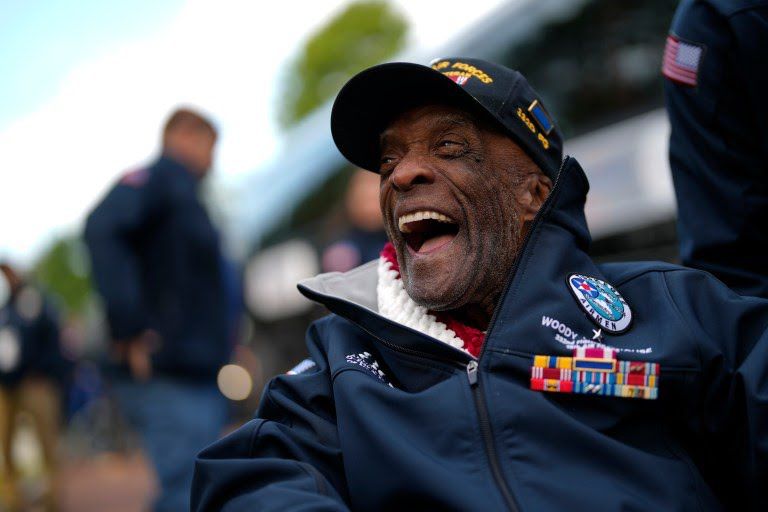
S. World War II veteran and Tuskegee Airman, Enoch “Woody” Woodhouse visits the Normandy American Cemetery in Colleville-sur-Mer, France, Tuesday, June 4, 2024. World War II veterans from across the United States as well as Britain and Canada are in Normandy this week to mark 80 years since the D-Day landings that helped lead to Hitler’s defeat. (AP Photo/Virginia Mayo)
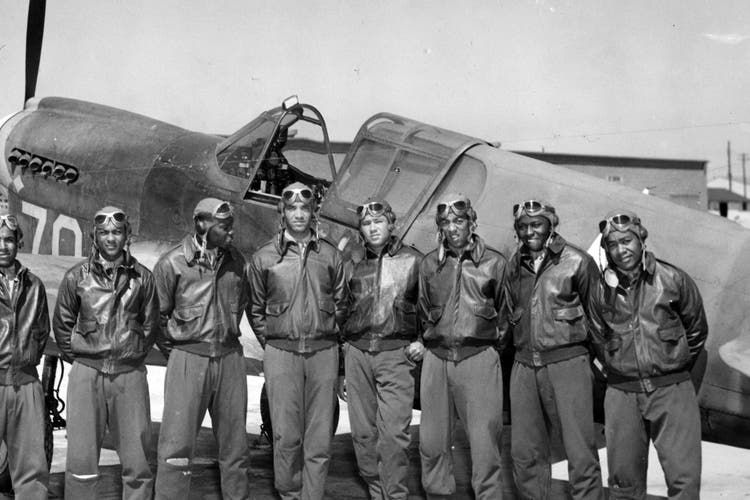
April 1943, the Tuskegee-trained 99th Pursuit Squadron deployed to North Africa, which the Allies had occupied.
In North Africa and then Sicily, they flew missions in second-hand P-40 planes, which were slower and more difficult to maneuver than their German counterparts. After the commander of the 99th’s assigned fighter group complained about the squadron’s performance, Davis had to defend his men before a War Department committee.
Rather than being shipped home, the 99th was moved to Italy, where they served alongside the white pilots of the 79th Fighter Group. In early 1944, pilots from the 99th shot down 12 German fighters in two days, going some distance toward proving themselves in combat.
In February 1944, the 100th, 301st and 302nd fighter squadrons arrived in Italy; together with the 99th, these squadrons of Black arrived in Italy; together with the 99th, these squadrons of Black pilots and other personnel made up the new 332nd Fighter Group.
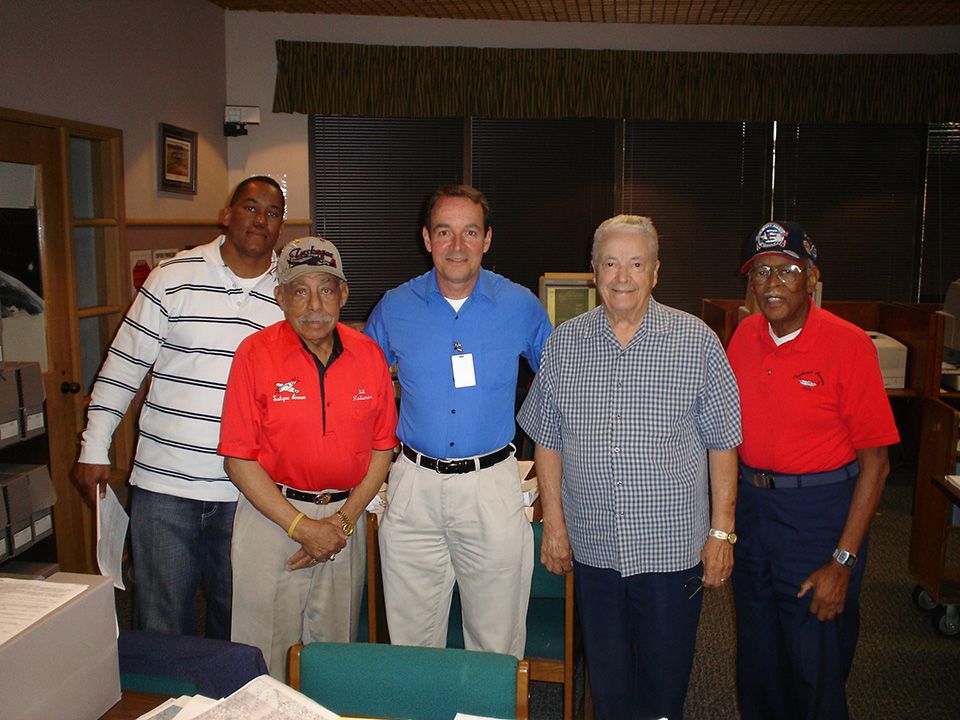
Daniel Haulman, PhD (center) with (L-R) Craig Huntly, historical researcher; Tuskegee Airman Col. William Holloman; Tuskegee Airman Lt. Col. George Hardy, and Tuskegee Airman Lt. Col. Alexander Jefferson.
The Tuskegee Airmen were also the first African American military pilots in American military service to deploy to a combat theater overseas, and to engage in combat, and to shoot down enemy aircraft.
The Tuskegee Airmen pilots are most remembered for flying fighters in the Mediterranean theater, first for the Twelfth Air Force, under which they flew hundreds of missions, then for the Fifteenth Air Force.
While flying for the latter, the 332d Fighter Group and its 99th, 100th, 301st, and 302d Fighter Squadrons flew primarily bomber escort missions, and gained a reputation for excellence. Between early June 1944 and the end of April 1945, the Tuskegee Airmen flew 312 missions, 179 of which were bomber escort missions. They lost escorted bombers to enemy aircraft on only seven of those missions.
https://store.nationalww2museum.org/the-tuskegee-airmen-freedom-flyers-of-wwii-pb/

Tuskegee Pilots

 Media News Global Voices