
“What to the Slave Is the Fourth of July?” was a speech delivered by Frederick Douglass on July 5, 1852, at Corinthian Hall in Rochester, New York, at a meeting organized by the Rochester Ladies’ Anti-Slavery Society. In the address, Douglass states that positive statements about perceived American values, such as liberty, citizenship, and freedom, were an offense to the enslaved population of the United States because they lacked those rights. Douglass referred not only to the captivity of enslaved people, but to the merciless exploitation and the cruelty and torture that slaves were subjected to in the United States.”
https://en.m.wikipedia.org/wiki/What_to_the_Slave_Is_the_Fourth_of_July%3F
A Nation’s Story: “What to the Slave is the Fourth of July?”
“On July 5, 1852, Frederick Douglass gave a keynote address at an Independence Day celebration and asked, “What to the Slave is the Fourth of July?” Douglass was a powerful orator, often traveling six months out of the year to give lectures on abolition. His speech, given at an event commemorating the signing of the Declaration of Independence, was held at Corinthian Hall in Rochester, New York. It was a scathing speech in which Douglass stated, “This Fourth of July is yours, not mine. You may rejoice, I must mourn.”
“In his speech, Douglass acknowledged the Founding Fathers of America, the architects of the Declaration of Independence, for their commitment to “life, liberty and the pursuit of happiness:”
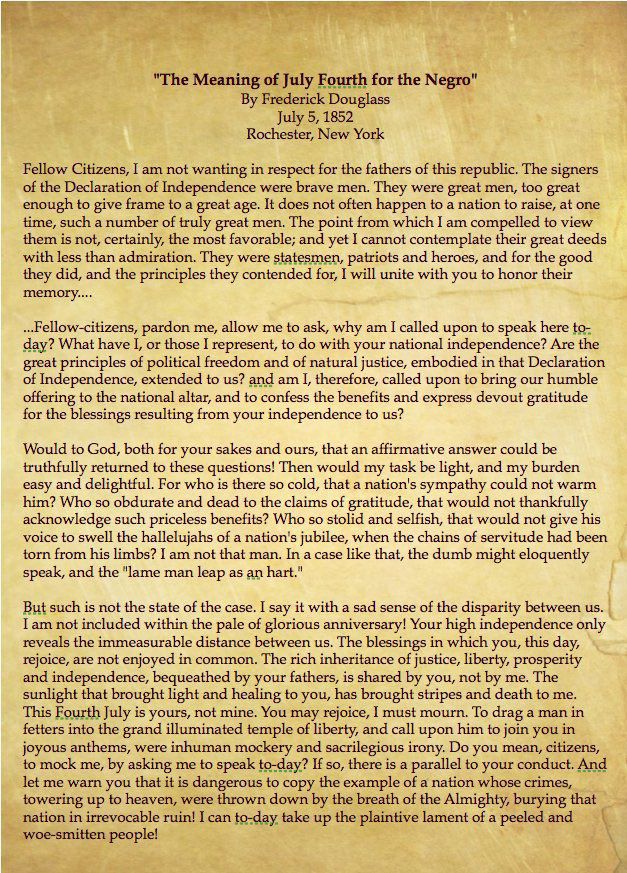
“Fellow Citizens, I am not wanting in respect for the fathers of this republic. The signers of the Declaration of Independence were brave men. They were great men, too, great enough to give frame to a great age. It does not often happen to a nation to raise, at one time, such a number of truly great men. The point from which I am compelled to view them is not, certainly, the most favorable; and yet I cannot contemplate their great deeds with less than admiration. They were statesmen, patriots and heroes, and for the good they did, and the principles they contended for, I will unite with you to honor their memory.”

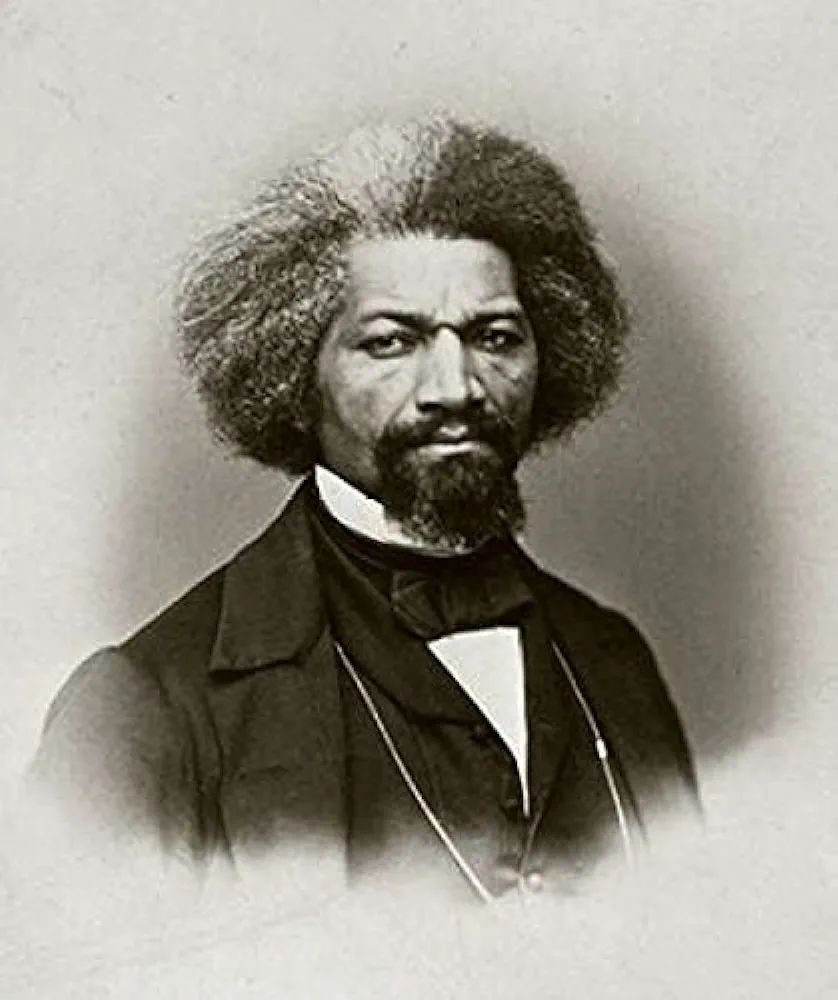
“A black-and-white photograph of Frederick Douglass wearing a jacket, waistcoat, and bowtie. The wet plate ambrotype plates are housed in a folding leather case with tooled gilt oval mat.”
Collection of the Smithsonian National Museum of African American History and Culture
“Douglass stated that the nation’s founders were great men for their ideals of freedom. But in doing so he brings awareness to the hypocrisy of their ideals by the existence of slavery on American soil. Douglass continues to interrogate the meaning of the Declaration of Independence, to enslaved African Americans experiencing grave inequality and injustice:”
“Fellow-citizens, pardon me, allow me to ask, why am I called upon to speak here to-day? What have I, or those I represent, to do with your national independence? Are the great principles of political freedom and of natural justice, embodied in that Declaration of Independence, extended to us? and am I, therefore, called upon to bring our humble offering to the national altar, and to confess the benefits and express devout gratitude for the blessings resulting from your independence to us?”
https://nmaahc.si.edu/explore/stories/nations-story-what-slave-fourth-july
 Media News Global Voices